The Identity of Chaos
Updated: Feb 9, 2021
A Guide Through the Symbolism of Majora's Mask

Created by Mauricio Mora
The Legend of Zelda: Majora’s Mask still remains one of the greatest, yet strangest Zelda games of all time. That's why it's my favorite.
Though the story contains a deep, powerful message, many have a difficult time understanding the meaning of this game’s story. This article will help to lay out the underlying themes and structures of the story so you can understand and apply the story into your own life.
Today we will focus primarily on the overarching story of Majora’s Mask. This means that we will not dive into the meaning of sub-plots or go in-depth about specific symbols. I will save those deep dives for another day. For now, we will start with the end of this game's predecessor, Ocarina of Time, as it sets up the structure for Majora’s Mask.
Sealing the Darkness, thus, Losing a Friend
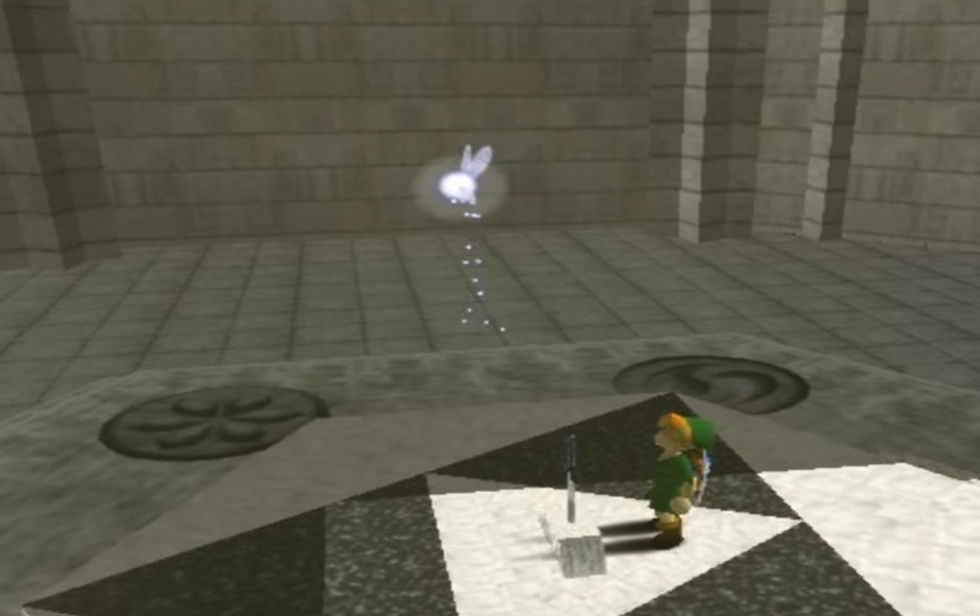
Link watches as his close friend flies away, leaving him forever.
At the end of Ocarina of Time, Link seals Ganon by piercing him with the Master Sword. By accomplishing this task his friend, Navi, leaves him. For the purposes of keeping this article succinct, we will not delve into the symbolism of Ganon or the Master Sword (I will likely explore it in another article if you are interested). However, I will briefly explain the meaning of Navi.
Throughout the story of Ocarina of Time, Navi acts as the guide for Link. That will hopefully be fairy obvious to you ;)…(Don’t worry I won’t use any more puns for now on) But, since we are on the topic of fairies, what exactly does it mean to have a fairy as a guide? To put it simply, you can look at a fairy guide as a representation of purpose. Before you think I am hopped up on acid, let me explain why this makes sense and how this exists in our everyday lives…
When we feel inspired, we often feel as though the inspiration came from outside of us. Ideas seem to “appear” in the back of our minds as if something else, a spirit perhaps, feeds them to us. For example, if you think “What if I write a book about a planet made entirely of corn?” the image of the corn-planet would have likely appeared to you from out of the blue. However, unless you do work to turn the idea into a reality, the idea will “flutter away” so to speak. Although most of our ideas come and go because they do not hold much value, you can occasionally stumble upon one that fills our lives with meaning. You can think of such ideas as our “calls to action”. For these calls to become something more than ideas, something that actually changes the world, we have to act on them (make a journey) to fulfill our potential. Navi embodies the “spirit” (i.e. idea) that fills Link’s life with purpose and pushes him to take action.
Navi pushes Link to get out of bed, points him the direction he needs to go (even literally with z-targeting), and guides him (albeit annoyingly) through the steps of his journey. Link eventually gains the power to face Ganon, seals Ganon away, and brings Hyrule to peace, all while Navi remains with him. Unfortunately, this final act leaves Link with a conundrum, “what now?” With the completion of his goal, Navi flies away, never to guide Link again. Link no longer has a direction (a fairy) to teach him where he needs to go. Because of this, Link begins to aimlessly wander. This brings us to the beginning of Majora’s Mask.
A Search for Meaning

Link‘s loneliness pushes him to journey to strange lands.
Link’s aimless search for purpose (Navi) leads him far away from his home: his center or the things he knows. The further we step away from a center, the more uncertain and strange things we encounter. For example, if you think of the word “chair”, that word lies at the center of all things that you could consider “chairs”. Although you could identify a few normal qualities that a chair has (such as a “sturdy thing you sit with four legs and a back-rest”), as you start exploring the idea of a “chair” you can find weirder and weirder objects that still count as a “chair”. Would a three-legged stool count as a chair? What about a log you sit on? Banana chairs don’t even have legs but they still count! As you get further from the average you start to enter strange, chaotic space that we can call the periphery.
Center: The place where all things come together. It can act as either a “king in a kingdom” (a concept that holds together all things associated with it, like how the word “dog” relates to all things “dog”) or it can act as an “axel to a wheel” (a concept that causes change and also associates with all things related to that change, such as a virus in relation to your cold)
Periphery: Everything that exists far away from an established center. This space contains the things that do not make sense, the things that cannot be easily put into words, and the things that scare us. We also get pushed to the periphery when something unexpected happens within a seemingly known structure.
While Link ventures out in the periphery, he encounters a strange imp that takes away Link’s horse, Epona. Link relies on Epona as the means of finding purpose (Navi), so, naturally, Link chases after him. The imp, who everyone knows as Skull Kid, leads him down a dark pit which Link cannot escape. When this happens, everything Link knows, believes, and depends upon all fall away from him. Link enters the realm of Chaos.
The Unforeseen Disaster

Skull Kid twists Link’s world around and leaves him powerless, just as any unexpected event would do to us.
When Link finally finds the bottom of the pit he fell into, Skull Kid, as the masked harbinger of change, taunts link and transforms him into a Deku Scrub. Link loses everything he could rely on to solve problems, including his humanity (Interestingly, “Deku” litterally translates into “useless person”). Although this transformation seems weird, we experience something similar every time we encounter an unexpected and powerful event. For example, if you or a loved one is suddenly diagnosed with cancer, all the things you thought you knew and could rely on in the world will suddenly feel distant and useless.
Thankfully, Skull Kid leaves behind a fairy, a new purpose, to guide Link through this change. Tatl wants to reunite with her brother, Tael (a play on “tattletale”), and needs Link’s help to do so. We will not delve into the symbolism of Tatl and Tael, and the back story of Skull Kid as these stories will likely need an article of their own to explain them. However, I will briefly explain what Skull Kid represents in the context of Link’s story.
Skull Kid lies at the center of disastrous change. You can think of him as the axel that turns Link’s world upside down. What makes Skull Kid so powerful is the weird mask he wears to create disasters, float just out of reach, and cover his true, weak identity. This strangeness pulls Link away from the structures he relies on, rendering Link powerless in the face of these changes. Because of this, Link does not have the ability to uncover Skull Kid’s true identity and take away his power.
Becoming Valuable: A New Journey Begins

The Happy Mask Salesman will restore your humanity, but you will remain in his debt until you face and obtain Majora’s Mask.
Link shuffles his way through a cave and stumbles into the center of a world called Termina. The name of this world, “Termina”, suggests that something is in the process of ending. As soon as Link steps into this new world, his old life, his quest to find Navi, and everything he relied upon ends. Link prepares to set foot into the new world, but he meets a mask salesman who tells him the famous words, “you’ve met with a terrible fate, haven’t you?”
The Happy Mask salesman has a complicated meaning, so I will save this character for another article as well. However, I will describe how he relates to Link. The mask salesman, as a master of false identities, can see right through Link’s Deku Scrub form. He immediatly knows that Link has the capability to overcome great obstacles, even though Link appears weak, useless, and depressed on the outside. Because of this, the happy mask salesman promised to return Link’s humanity (and in many ways his happiness), so long as Link returns Majora’s Mask to the salesman. To put it simply, Link becomes valuable again in exchange for facing and uncovering the thing that made him weak in the first place. Unfortunately, the effects of this deal do not take place immediatly. Link must first learn how to work with his current form.
Running around as a child-like Deku quickly reveals Link’s limitations. He cannot leave town, can get trampled by a small dog, most people look down on him, and he cannot even book a hotel room. However, despite all of these constraints, Link must take advantage of the abilities he does have at his disposal. Using these tools, he earns the trust of a gang of children called the “Bombers” and finds his way to an observatory, where he can safely look at his foe from a distance. Doing this gives Link more clarity of the world and allows him to take a valuable piece of the doom that falls toward Termina, the Moon’s Tear. This tear represents an aspect of the true, central identity of Majora and the chaos he creates, sadness and despair. Although it does not allow Link to fully unveil Majora’s Mask, the Moon’s Tear allows Link to get closer to the center (i.e. Majora’s Mask).
Link does not have much power at this point, however, his finite set of tools proves to work well enough to give Skull Kid a taste of his own medicine. Skull Kid encounters the unexpected through a magic-bubble from Link, which startles him into dropping Link’s ocarina. By regaining this tool, Link gains enough power over the mask to push the disaster away so he can survive until he finds a permanent solution.
Searching the Land to Repay the Debt

Link must delve into ancient structures to find the sources of the chaos that plague the land.
When Link plays the Song of Time, he can distance himself from Majora’s chaos at the cost of losing the rupees and ammo he collected along the way. The first time Link does this, he meets with the mask salesman who promptly restores Link’s humanity with the Song of Healing. Unfortunately, Link cannot return his side of the bargain. This leaves Link indebted to the Mask Salesman and trapped in the world of Termina.
At this point, the story becomes similar to the story of Rumplestiltskin (you can read Rumplestiltskin here if you are not familiar with the tale). Link must venture out into all four corners of the land earning tools and masks (similar to how the Queen’s messenger collects names from the kingdom in Rumplestiltskin). With these tools, Link becomes more powerful and useful in the world. He can even help others solve their own catastrophes. As he does so, he slowly uncovers the nature (the “name” so to speak) of Majora’s influence.
Majora’s Mask strips away the potential of others by instilling looming threats. His power poisons and pollutes the waters, covers a fertile land with permanent winter, curses a once prosperous land, and, most importantly, hides and imprisons the beings that can prevent disaster. Thankfully, Link can resolve these problems by finding the source and breaking them apart. Doing so allows Link to free four giants that promise to help prevent catastrophe. Although the giants can seem mysterious and confusing, you can think of them simply as a representation of balance, support, and order (hence why the name of their song is “Oath to Order”). This is why Link must free the giants on all sides of Termina. When Link frees all of these giants he gains the proper support he needs to restore balance to the world.
Finding the Heart of the Problem

By preventing the world from falling apart, Link can delve into the core of Majora’s Mask and face its power.
Solving individual issues helps Link gain more power but it does not resolve the root of the problem. Link must face the epicenter of the chaos in order to free himself from Termina. Otherwise, Link’s debt will always hang over his head. Thankfully, the strength and friends he gains help him to accomplish this goal. Link can officially declare an end to the disaster and face the problem head-on.
Link positions himself to finally take ahold of the false identity Skull Kid wears. However, Link quickly realizes that the problem does not lie under the mask, but rather lies in the mask itself. When Link discovers this, Majora’s Mask quickly disposes of Skull Kid and tries to hide deep within the problems it created (i.e. the moon). Link can, thankfully, follow the mask into the moon in order to deal with the problem once and for all. However, doing so puts Link in a strange place…
Link finds a utopia at the center of the moon, where the spirits (the masks) of all the major problems of Termina play around a tree in an open field. Each of these problems takes the form of children wearing the masks of the bosses Link faced to free the giants. Each of these children ask Link strange questions. For example, the child that wears Gyorg’s mask asks, “ …Umm… Can I ask… a question? The right thing… What is it? I wonder… If you do the right thing… Does it really make… everybody…happy?” These questions not only cut right into Link’s problems, but also the fundamental problems of living. Each of us exists as equally the center of our universe as well as an outsider of everyone else’s perspective. How can we act accordingly when our central values can contradict everyone else’s core values?
We can only experience reality from our own central perspective. However, as humans, we also have a limited grasp of reality. The problems and beliefs that are central to us may have no meaning to another person. This problem affects us every day and can often isolate us. Do we really help others when we think we are helping them, or are we just hurting them even more? Are we really doing something good, or are we acting purely out of self-interest? We can never really find a clear answer to these questions. However, we can resolve many of these problems by expanding our center, the things we can control. By including others in your center, you can learn about others’ values and create win-win scenarios or compromises. Link resolves his core conflict by doing this with Majora’s Mask.
Link finds a child wearing Majora’s Mask sitting at the base of a tree in the center of the moon. He sits alone and only asks for someone to play with him. In other words, all the mask wants, the spirit that lies at the center of all of Link’s problems, is to feel valued. Majora’s Mask has so much power over Link because he and Link share the same problem. Link felt lonely without Navi, his purpose, alongside him. This loneliness and purposelessness left Link vulnerable because Link had no tools to help him overcome it. This caused Link to be pulled by the “spirit of loneliness” (Majora’s Mask) into a downward spiral (the land of Termina) and come face to face with his doom. However, with the support Link gains from exploring this problem, he can finally confront this loneliness. Through Link’s empathy of Majora’s Mask, Link can fully understand the nature of loneliness.
After a long, painful battle Link becomes victorious against the root of his disasters. The world of Termina can finally move on. Termina no longer means an end for Link, but rather a new beginning. He frees himself from the prison of his loneliness/purposelessness because he has learned how to conquer it. Link can journey onward, finally leaving behind his struggles in order to search for new lands to explore.
-Yak
P.S. If you want to learn more about symbolism, check out The Symbolic World on YouTube. The Symbolic World goes into greater depth on how art can teach us how the world works. Let me know if you have any suggestions for any characters or topics I should cover in future articles. Thanks!


Comments